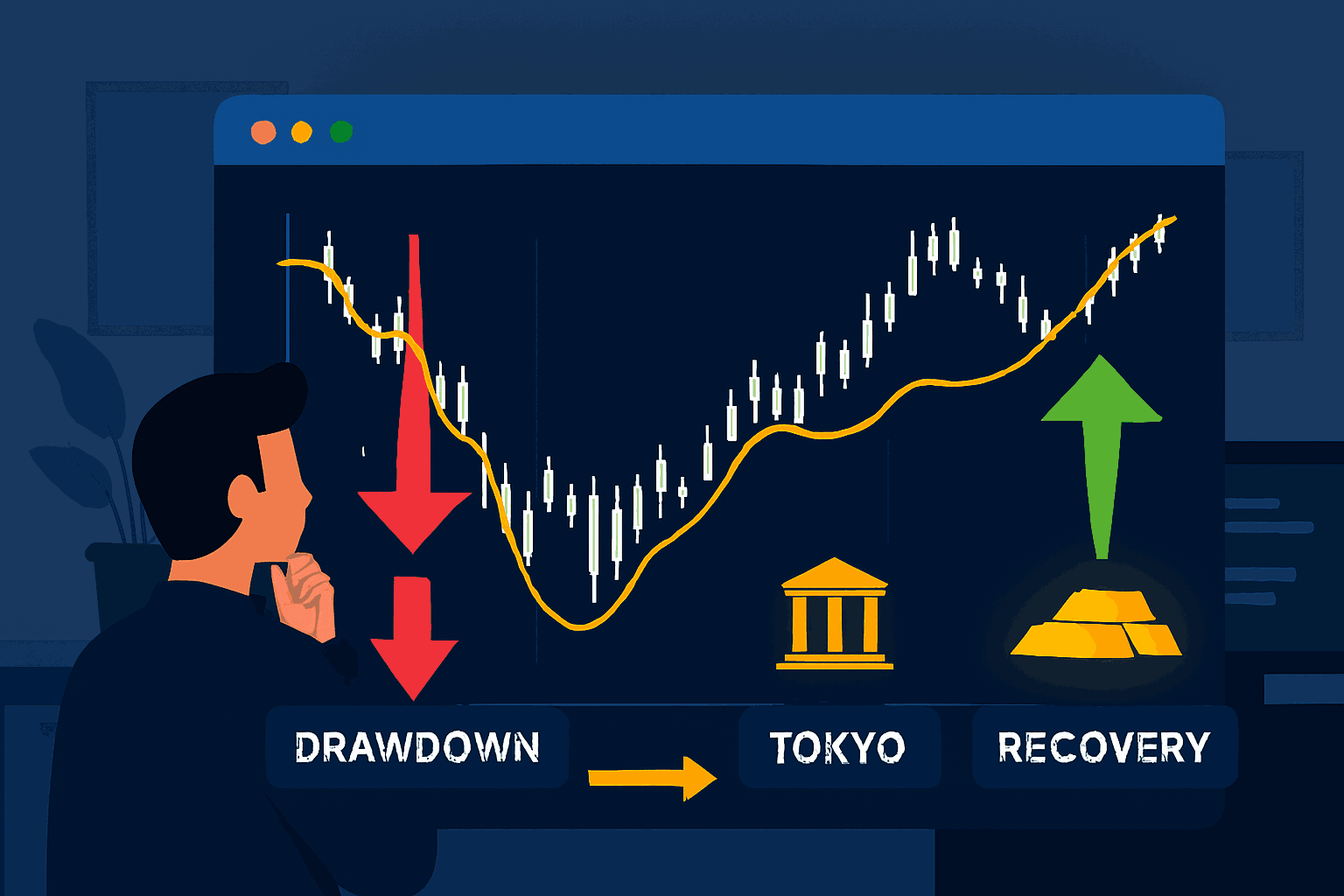
In forex trading, profits often steal the spotlight, but understanding drawdown and recovery is equally crucial for long-term success. Drawdowns represent the periods when a trading account declines from a peak before bouncing back, while recovery measures how quickly profits are regained. Monitoring these metrics on platforms like MyFXBook can reveal hidden strengths and weaknesses in trading strategies, helping traders manage risk more effectively.
What Is Drawdown and Why It Matters

Drawdown is the reduction of an account’s peak equity, expressed either in percentage or monetary terms. For example, if an account grows from $10,000 to $12,000 and then drops to $11,000, the drawdown is $1,000 or roughly 8.33%.
- Why it matters: Large drawdowns can erode both capital and trader confidence. High drawdowns may indicate excessive risk-taking, poor trade management, or flawed strategies.
- How to use it: Evaluate drawdowns across different strategies and instruments. Avoid strategies that consistently produce extreme declines relative to potential gains.
Drawdowns also offer insight into emotional resilience. Traders who can navigate periods of loss without deviating from their plan are more likely to succeed in the long run.
Recovery: Measuring Resilience
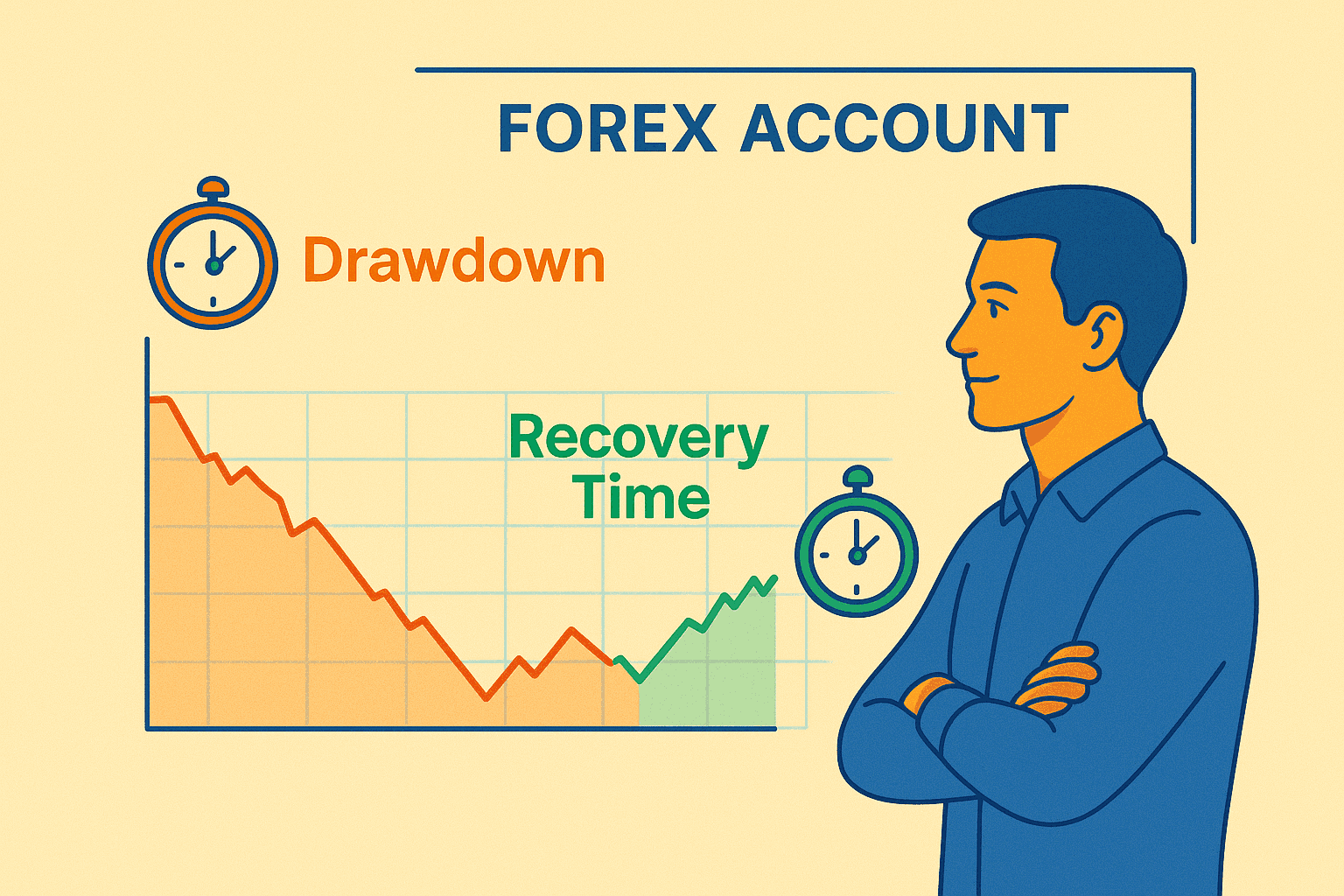
Recovery is the period it takes for an account to return to its previous equity high after a drawdown.
- Why it matters: Recovery time impacts not only capital growth but also psychological stability. Long recovery periods can induce stress and may lead to hasty trading decisions to recoup losses.
- How to use it: Track how quickly strategies rebound after drawdowns. Short recovery times suggest robust and consistent strategies, whereas slow recovery signals potential vulnerabilities that need adjustment.
Traders should also consider the relationship between drawdown depth and recovery time. Smaller drawdowns with faster recoveries are typically safer and indicate disciplined risk management.
Key Metrics for Monitoring Drawdown and Recovery
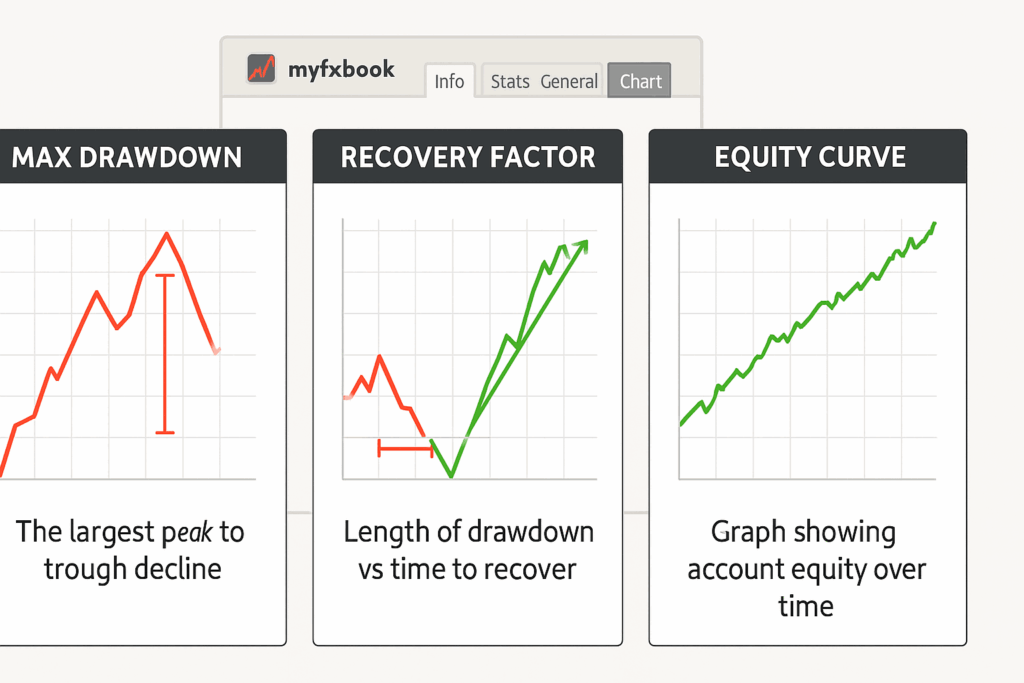
- Maximum Drawdown (Max DD): Shows the largest peak-to-trough decline. A lower Max DD is preferable for preserving capital.
- Recovery Factor: Calculated as net profit divided by maximum drawdown. A higher ratio indicates that the strategy can recover efficiently from losses.
- Equity Curve Analysis: Visualizing equity curves on MyFXBook helps identify patterns of drawdown and recovery over time. Smooth curves with moderate drawdowns indicate consistency, while erratic swings may require strategy refinement.
Practical Tips for Managing Drawdown

- Position Sizing: Adjust trade size to limit potential losses per trade, reducing the chance of large drawdowns.
- Stop-Loss Discipline: Use stop-loss orders effectively to prevent emotional decision-making and protect equity during volatile periods.
- Diversification: Trading multiple currency pairs or instruments can smooth drawdowns, ensuring that one losing trade does not drastically affect the account.
- Regular Review: Analyze drawdown periods to understand what went wrong was it market conditions, overleveraging, or a flawed entry/exit strategy?
Lessons from Recovery Patterns

Observing recovery trends can provide actionable insights:
- Rapid Recovery: Indicates that the strategy performs well under various market conditions and adapts quickly.
- Slow Recovery: Suggests that risk exposure is too high or the strategy lacks flexibility, requiring adjustments to position sizing or trade frequency.
- Pattern Recognition: Recurrent drawdown-recovery cycles can reveal the strengths and weaknesses of different trading sessions, pairs, or strategies.
Final Thoughts
Drawdown and recovery metrics are more than just numbers, they reflect a trader’s risk management, strategy robustness, and psychological resilience. Platforms like MyFXBook allow traders to track these metrics closely, helping them make informed decisions and refine strategies over time.
By understanding drawdown patterns, implementing risk controls, and observing recovery trends, traders can enhance their long-term performance. Consistently monitoring these performance secrets ensures disciplined trading, better capital preservation, and a higher probability of sustained success in the dynamic forex market.